The first time your child spots a bright parrotfish gliding over a Cayman reef can become the vacation moment everyone talks about long after the flight home. Knowing how to prepare children for snorkeling helps make that moment feel exciting instead of overwhelming. With the right fit, a little practice, and a relaxed plan, even first-time young snorkelers can feel comfortable getting a closer look at the Caribbean’s underwater world.
Start With the Right Expectations
Children do not need to be expert swimmers to enjoy a guided snorkeling stop, but they do need to feel secure in the water. Before the trip, explain what snorkeling is in simple, positive terms: floating at the surface, breathing slowly through a tube, and looking down at fish, coral, and sandy seafloor.
Skip the pressure to make them do everything immediately. Some children are ready to put their face in the water within minutes. Others may prefer to hold an adult’s hand, wear a flotation device, or watch from the boat first. All of those responses are completely fine. The goal is a happy ocean experience, not a test of bravery.
It also helps to talk honestly about what they may see. Cayman’s clear water is full of colorful fish, gentle rays, sea fans, and sometimes larger marine life at a distance. Remind children that wild animals are wonderful to watch, but never to chase, grab, or feed.
How to Prepare Children for Snorkeling Before the Boat Leaves
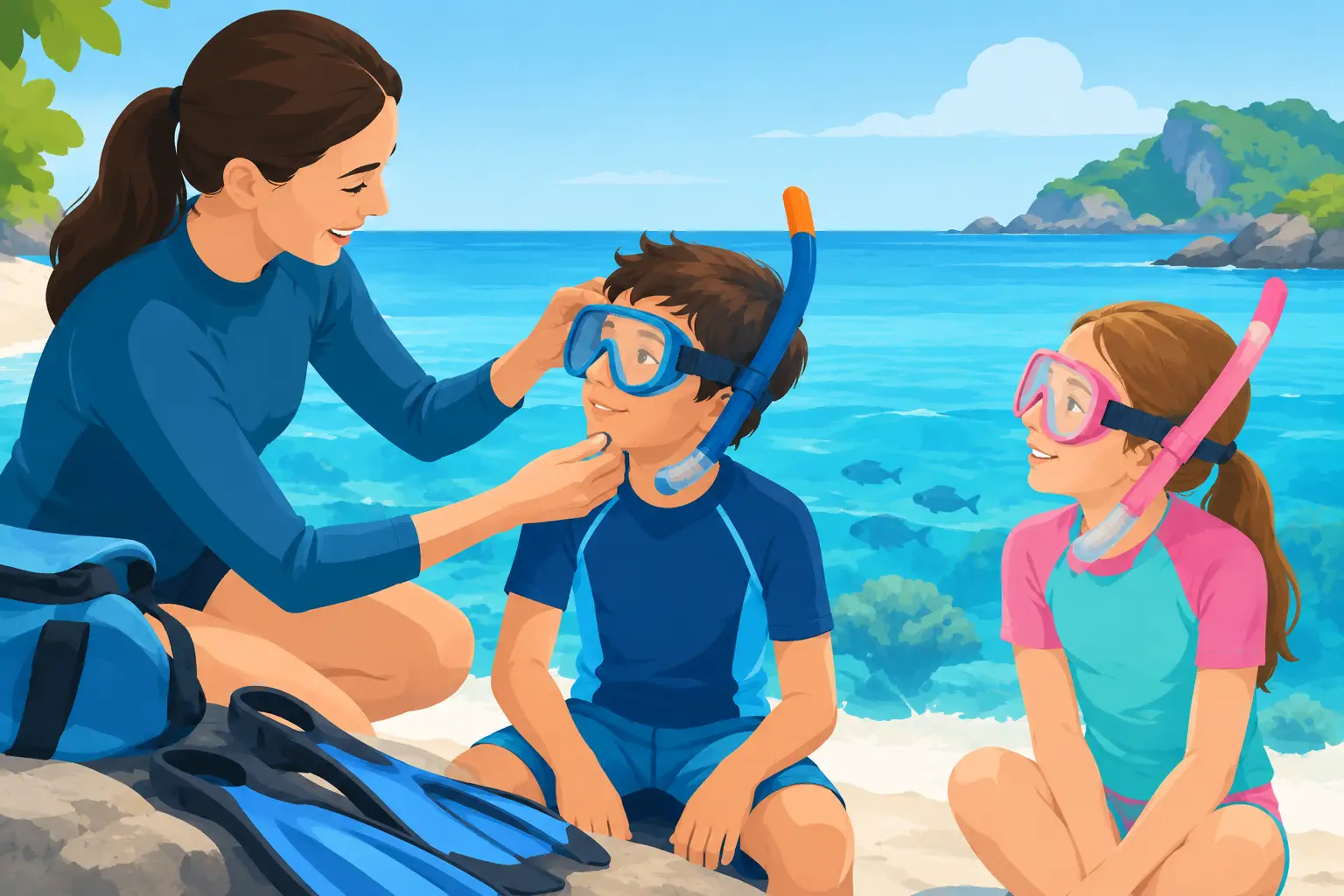
A little dry-land practice goes a long way. Let your child wear their mask and snorkel at the pool, in a bathtub for younger kids, or while sitting comfortably on shore. They can learn how the mask feels around their face and practice putting the snorkel mouthpiece in place without rushing.
The most common issue for new snorkelers is breathing through the mouth. Encourage slow, easy breaths. Have them practice with their face in shallow water only when they are ready, then lift their head to take a break. Small wins build confidence quickly.
If they are old enough to understand, show them how to clear a little water from the snorkel by lifting their face out of the water. They do not need to become technical experts. They simply need to know that if something feels uncomfortable, they can stop, lift their head, and signal an adult or guide.
For nervous kids, a mask-only introduction can be a great first step. They can float with their face in the water and hold their breath for a few seconds to look below. Once the ocean feels less mysterious, the snorkel often becomes much easier.
Make Sure Gear Fits Comfortably
Great snorkeling gear should feel almost invisible once your child is in the water. A leaking mask, loose fins, or an oversized snorkel can turn an exciting stop into a frustrating one, so fit matters more than fancy equipment.
A mask should seal gently around the face without hair caught underneath the skirt. Test it by placing it against the face without using the strap and asking your child to breathe in lightly through their nose. If it stays in place for a moment, it likely has a good seal. Avoid making the strap too tight, which can actually cause leaks and leave uncomfortable marks.
Fins should be snug but never painful. For many younger children, short fins are easier to manage than long ones because they require less effort and reduce the chance of bumping into a sibling or parent. A properly sized flotation vest or snorkeling vest gives added buoyancy and helps children save energy while they look around.
Bring or request a rash guard for extra comfort. It provides a layer between delicate skin and the sun, and it is especially useful on longer boat days. Reef-safe sunscreen belongs in the plan too, but it should be applied before boarding and reapplied according to its directions.
Choose Calm Water and Keep the First Session Short
A calm, clear snorkeling spot can make all the difference for a child’s first experience. Choppy water, strong currents, or a crowded swim area can be intimidating even for adults. On a guided Cayman outing, the crew can help select conditions and locations that suit the group’s comfort level.
Start with a short session, often 10 to 15 minutes in the water, then return to the boat or a shallow area for a break. Ask what they saw, offer water, and celebrate the details. “Did you see the yellow fish by the coral?” is much more encouraging than “Why did you get out so soon?”
Children often return for a second swim with more confidence after realizing they can get out whenever they want. The best pace depends on their age, swimming ability, sea conditions, and how well they slept, ate, and adjusted to the sun that day. There is no prize for staying in longest.
Set Simple Safety Rules They Can Remember
Long instructions disappear the moment a child sees a fish. Keep the rules short, repeat them before entering the water, and make sure every child knows which adult they should stay near.
For a family snorkeling day, these four rules cover the essentials:
- Stay with your adult or guide at all times.
- Float, look, and kick gently – no running, splashing, or diving down without permission.
- Keep hands, feet, and fins away from coral and marine life.
- If something feels wrong, raise a hand or go back to the boat right away.
Coral reefs are living communities, not underwater playground equipment. A quick reminder to look without touching protects both your child and the reef. Even seemingly harmless contact can damage delicate coral or lead to an unexpected scrape.
Adults should stay close enough to offer reassurance, especially with first-time snorkelers. Holding hands is perfectly acceptable at the beginning. As confidence grows, give children a little room to float beside you while keeping them within easy reach.
Prepare for Sun, Snacks, and Boat Time
Snorkeling is only one part of the adventure. A tired, thirsty, or hungry child is less likely to enjoy even the clearest water. Pack water, simple snacks, dry towels, and a change of clothes for after the swim. A hat and lightweight cover-up are useful during boat rides and breaks between stops.
If your child is prone to motion sickness, plan ahead with advice from their pediatrician before the excursion. Keep them looking toward the horizon during the ride, encourage small sips of water, and avoid a heavy meal immediately before departure. Fresh air and a comfortable seat can help too.
Give kids a role on the boat. Let them help spot the first fish, choose a favorite reef color, or listen for the captain’s safety instructions. Feeling included turns boat time into part of the adventure rather than a wait for the next activity.
Let a Guided Experience Take the Pressure Off
Parents should get to enjoy the reef, not spend the entire outing trying to troubleshoot foggy masks and nervous first breaths. A knowledgeable crew can help fit gear, explain entry and exit procedures, point out marine life, and keep an eye on conditions while your family focuses on having fun.
Blue Ocean Cayman’s private and small-group experiences are especially well suited to families with mixed confidence levels. One child may be eager to jump in while another needs a few extra minutes at the swim platform. A more personal setting creates room for both, without the rush of a large crowded tour.
Tell your crew about your children’s ages, swim comfort, and any concerns before departure. That simple conversation helps shape a more relaxed day, whether your family is planning a reef snorkel, a Stingray City stop, or a multi-activity boat adventure.
The best preparation is not about turning your child into a fearless snorkeler before vacation. It is about giving them a safe, supported first look beneath the surface – then letting Cayman’s clear blue water do the rest.