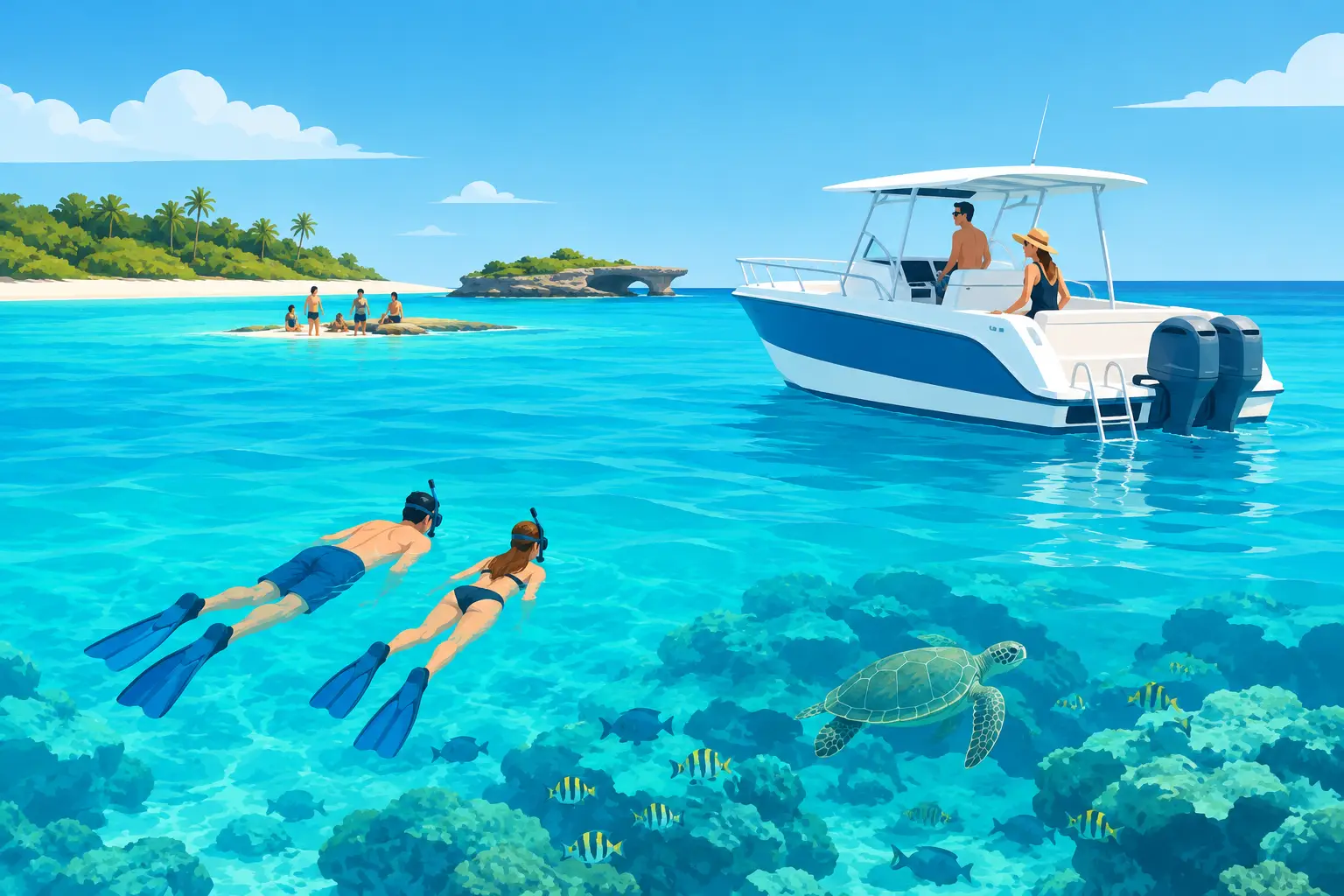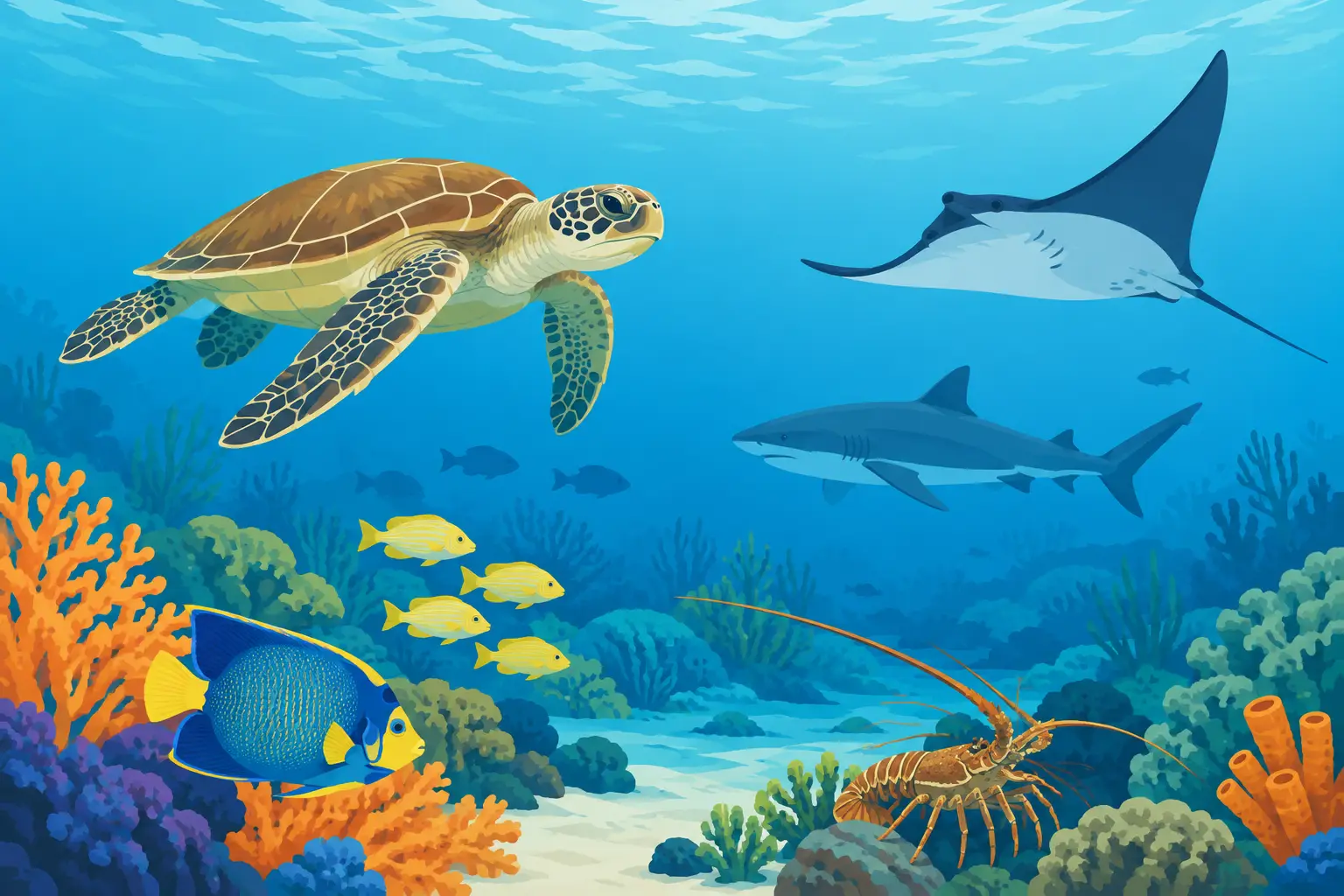
A flash of silver beneath the boat, a spotted wing gliding over white sand, a bright blue fish disappearing into coral – Cayman waters turn every swim stop into a real-life treasure hunt. This marine life identification guide helps you recognize the animals you may meet while snorkeling, swimming, or cruising around Grand Cayman, so every encounter feels even more memorable.
The best part? You do not need to be a marine biologist to enjoy the moment. A few visual clues, a respectful distance, and a knowledgeable local guide can turn “What was that?” into one of your favorite vacation stories.
Start With the Habitat, Not Just the Animal
Marine life is easier to identify when you notice where it is living. Calm, shallow sandbars attract different animals than a colorful reef wall or a seagrass flat. Before you focus on colors or markings, look around.
At Stingray City, the clear, shallow sandy bottom is your first clue that southern stingrays may be nearby. On a reef snorkel, look toward coral heads and crevices for smaller fish, while larger fish often cruise along the reef edge. Near quiet grass beds and sheltered shallows, you may spot sea turtles, conch, or juvenile fish using the area as a nursery.
Conditions matter, too. Morning sun can make colors pop, while wind, clouds, and deeper water can make a fish look darker or less vivid than it truly is. That is why it helps to identify an animal by its body shape, behavior, and location, not color alone.
Marine Life Identification Guide: Cayman Favorites
Southern stingrays
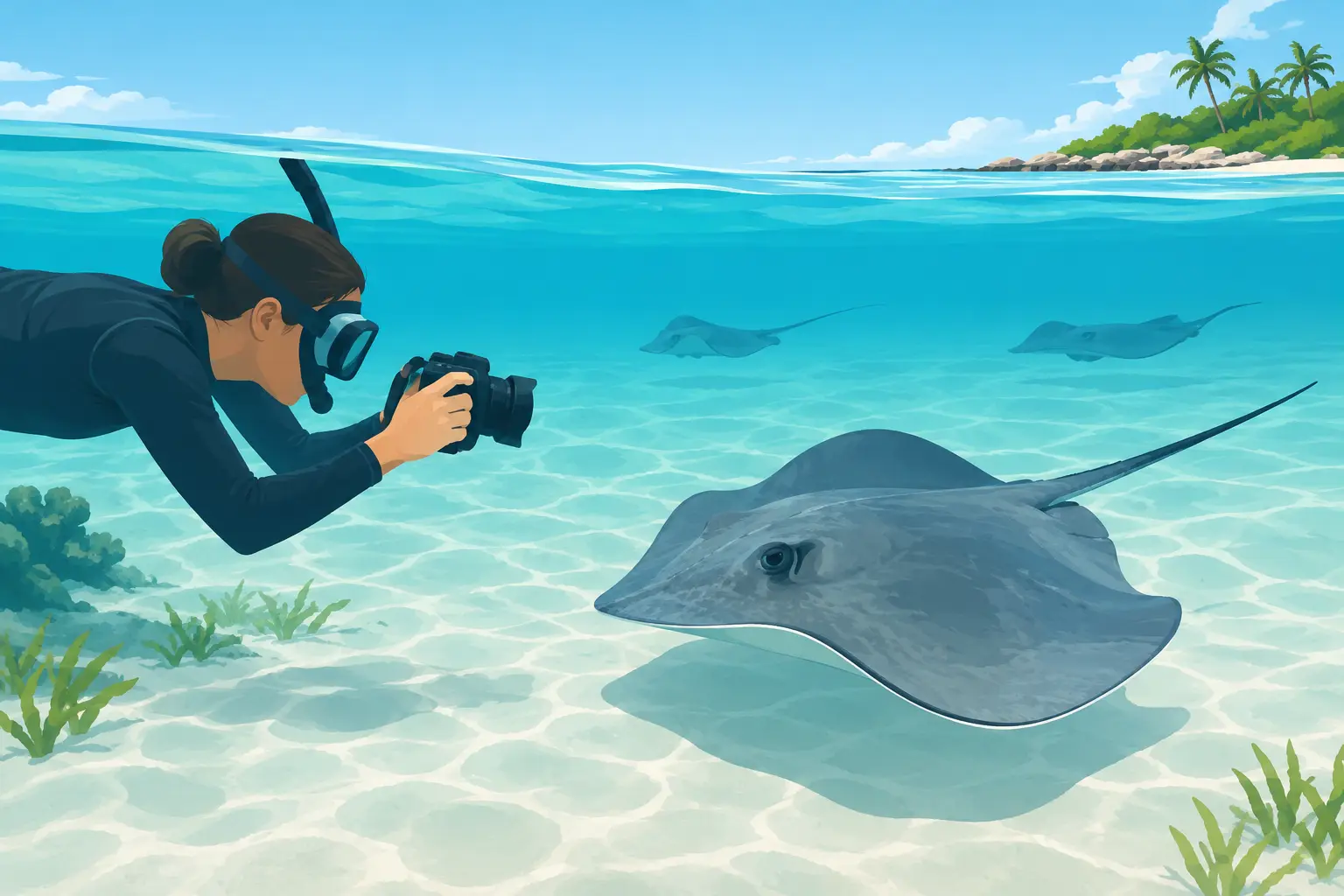
Southern stingrays are the stars of many Cayman adventures, especially at Stingray City. They have broad, diamond-shaped bodies, long whip-like tails, and often show gray-brown coloring with pale undersides. From above, they can look like they are flying just over the sand.
These rays are graceful, curious, and powerful animals. Their tail contains a defensive barb, so the right approach is always calm and guided. Never chase, grab, or step near a stingray. A respectful, well-managed encounter lets you appreciate their beauty while giving them room to move naturally.
Sea turtles
Green sea turtles and hawksbill turtles are among the most exciting sights on a Cayman snorkel. A green turtle usually has a smoother, rounded head and may be seen grazing around seagrass areas. Hawksbills have narrower, pointed beaks that help them feed around reefs and sponges.
You may notice a turtle rise to the surface for air, then slowly sink back toward the reef. Give it space and resist the urge to swim directly above it. Turtles need a clear path to surface, and a patient observer often gets a better look than someone trying to follow too closely.
Queen conch
A queen conch is easy to miss until you know what to look for: a large spiral shell resting or moving across sandy patches and seagrass. When alive, you may see its soft body extend from the shell, often with a distinctive pink-orange tone near the opening.
Conch are an important part of the Caribbean seafloor ecosystem. Look, photograph, and leave them exactly where they are. Even an empty-looking shell can be home to another creature.
Starfish
At Starfish Point, the shallow water may reveal large sea stars resting on the sandy bottom. Their familiar five-armed shape makes them a favorite for families, but they are living marine animals, not photo props.
The best way to enjoy a starfish is in the water, from a comfortable distance. Keep it submerged, avoid touching it, and do not move it into a different location for a picture. A quick photo is never worth stressing an animal that depends on its environment to survive.
Reef fish
Cayman reefs are packed with color and movement. Common fish you may see include blue tangs, yellowtail snappers, sergeant majors, parrotfish, French angelfish, and trumpetfish. Learning a few broad categories makes identification much easier.
Parrotfish often have thick, beak-like mouths and bright blended colors. They nibble algae from reef surfaces, helping keep coral areas healthy. Sergeant majors have bold dark stripes down their sides and often gather in small groups. Blue tangs are flat-bodied and brilliantly blue, while yellowtail snappers usually have a yellow stripe and a sunny yellow tail.
Do not worry if you cannot name every fish. Notice how it moves. A fish pecking at coral, hovering near a ledge, schooling in open water, or blending into a sea fan is already telling you something about its place on the reef.
Four Clues That Make Identification Easier
When something catches your eye underwater, take a mental snapshot before reaching for a camera. Focus on these four clues:
- Shape: Is it flat like a ray, oval like an angelfish, long like a barracuda, or round like a pufferfish?
- Markings: Look for stripes, spots, colored tails, bands, or a patterned shell.
- Movement: Does it glide, dart, hover, graze, bury itself in sand, or travel in a school?
- Setting: Is it over sand, coral, seagrass, open water, or tucked into a crevice?
These details are more useful than trying to memorize dozens of species before your trip. They also help your guide answer questions quickly and accurately during the tour.
Animals to Appreciate From Extra Distance
Cayman waters are full of beautiful wildlife, but some animals deserve more personal space than others. Barracuda, nurse sharks, moray eels, lionfish, and jellyfish can all appear during a day on the water.
Barracuda are long, sleek fish with a pointed head and noticeable teeth. They are often curious rather than aggressive, but they should never be fed or approached closely. Nurse sharks are usually seen resting on the seafloor and are generally calm, yet they are still wild animals. Watch quietly and let them choose the distance.
Lionfish are stunning but invasive in the Caribbean, recognized by their dramatic striped pattern and long, fan-like venomous spines. Enjoy the view without touching. Moray eels may peek out from reef holes with open mouths, which is usually part of how they breathe, not necessarily a threat display. Still, keep hands away from crevices. You never know who is home.
Make Your Snorkel More Wildlife-Friendly
Great marine encounters are not about getting the closest possible photo. They are about seeing animals behave naturally in the place they belong. Keep fins away from coral, avoid standing on the reef, and use reef-safe sun protection whenever possible. Small choices protect the scenery that makes a Cayman boat day so spectacular.
If you are snorkeling with children or first-time swimmers, let the group know that slow movements lead to better sightings. Splashing, chasing fish, and grabbing at shells can send wildlife away fast. A relaxed float, a good mask fit, and a guide who knows the area create a much better experience for everyone.
Photography has trade-offs, too. An underwater camera can preserve an incredible moment, but do not let the screen pull you away from your surroundings. Take a few shots, then pause and watch. You may notice the ray burying itself in sand, a turtle taking a breath, or a parrotfish working across the reef – the details a still photo cannot fully capture.
Let a Local Guide Add the Story
A guided private outing gives you more than a ride to a beautiful snorkel spot. It gives you someone who can point out what is easy to overlook, explain the respectful way to interact with wildlife, and adjust the plan for your group’s comfort and experience level.
Blue Ocean Cayman creates those easy, personal moments on the water, from the famous stingrays of Stingray City to reef snorkeling and the calm shallows near Starfish Point. Whether you are traveling with curious kids, celebrating as a couple, or bringing your whole crew, having a local team nearby lets you spend less time wondering what you are seeing and more time enjoying it.
Bring a sense of curiosity, keep your distance, and let the water set the pace. The next animal you spot may be the one your family talks about long after the vacation ends.