A stingray gliding over white sand at Stingray City is one of those Grand Cayman moments that deserves more than a rushed snapshot. Knowing how to photograph stingrays safely helps you come home with beautiful images while giving these remarkable animals the calm, respectful space they deserve.
The goal is simple: let the stingray stay in control of the encounter. Your guide can help position your group, point out the best viewing angles, and keep the experience comfortable for every guest, from first-time snorkelers to confident underwater photographers. When you slow down, stay aware, and use a few smart camera habits, the photos tend to get better anyway.
Start With a Safe, Respectful Stingray Encounter
Stingrays are not out looking for trouble. They are generally calm animals that may approach people in well-managed areas, especially where they are accustomed to boats and guided visitors. Still, they have a protective barb at the base of the tail and may react defensively if they feel trapped, stepped on, grabbed, or startled.
That means the best photo rule is also the best safety rule: never chase, corner, restrain, or touch a stingray for a picture. Let it pass through the scene naturally. Keep your feet planted carefully in sandy areas when your guide says it is appropriate to stand, and avoid sudden splashing that can disturb the animal or other guests around you.
If a ray comes close, resist the urge to reach over it with your camera. Instead, lower yourself gently in the water if conditions and your guide allow, hold your camera at a comfortable distance, and wait. A relaxed ray makes a far more striking subject than one trying to get away.
At Stingray City, conditions can change with weather, tide, boat traffic, and the number of visitors in the water. Listen to your captain and crew before you step in. They know where guests can move safely, where rays are likely to pass, and how to keep the experience fun without crowding the wildlife.
Choose Camera Gear That Works in the Water
You do not need professional equipment to capture a great stingray photo in Cayman. A waterproof phone case can work beautifully on a bright, calm day, while an action camera is often the easiest choice for families and first-time underwater shooters. If you bring a mirrorless or DSLR camera, use a housing you have tested before the trip.
Whatever you use, make sure it is truly rated for the depth and conditions you expect. Check every housing seal for sand, hair, salt, or dust before leaving the boat. One tiny grain can cause a leak, and an underwater camera problem is not something you want to troubleshoot while a stingray is passing by.
A wrist strap or secure lanyard is a smart addition. It helps protect your camera if you lose your grip in the water, but keep the strap short enough that it does not trail near a ray, coral, or another swimmer. Large dangling accessories can create clutter in your photo and unnecessary disturbance in the water.
Skip the flash when possible. Cayman sunshine is often plenty for shallow-water photography, and natural light gives the scene its signature turquoise color. A flash can create bright floating particles in the image and may be distracting to nearby wildlife and guests. If the water is cloudy or the sun is low, focus on getting closer only when the stingray voluntarily approaches rather than trying to force a distant shot with more equipment.
Set Up Before You Enter the Water
Adjusting controls while you are floating can make you miss the moment. Set your camera before you enter, then make small changes only if needed.
For action cameras and phones, choose video or burst mode if you can. Stingrays move with smooth, graceful motion, and a short sequence gives you more chances to catch their wings in a dramatic position. For dedicated cameras, a moderately fast shutter speed helps keep the ray sharp while the water shifts around you.
Use a wide-angle setting when the animal is close, but do not put your lens inches from its face. Wide views can show the ray, the sandy seafloor, sunbeams, and the vivid blue water in one frame. That sense of place is what makes a Cayman photo feel like a real memory rather than a wildlife close-up from anywhere.
How to Photograph Stingrays Safely From the Best Angle
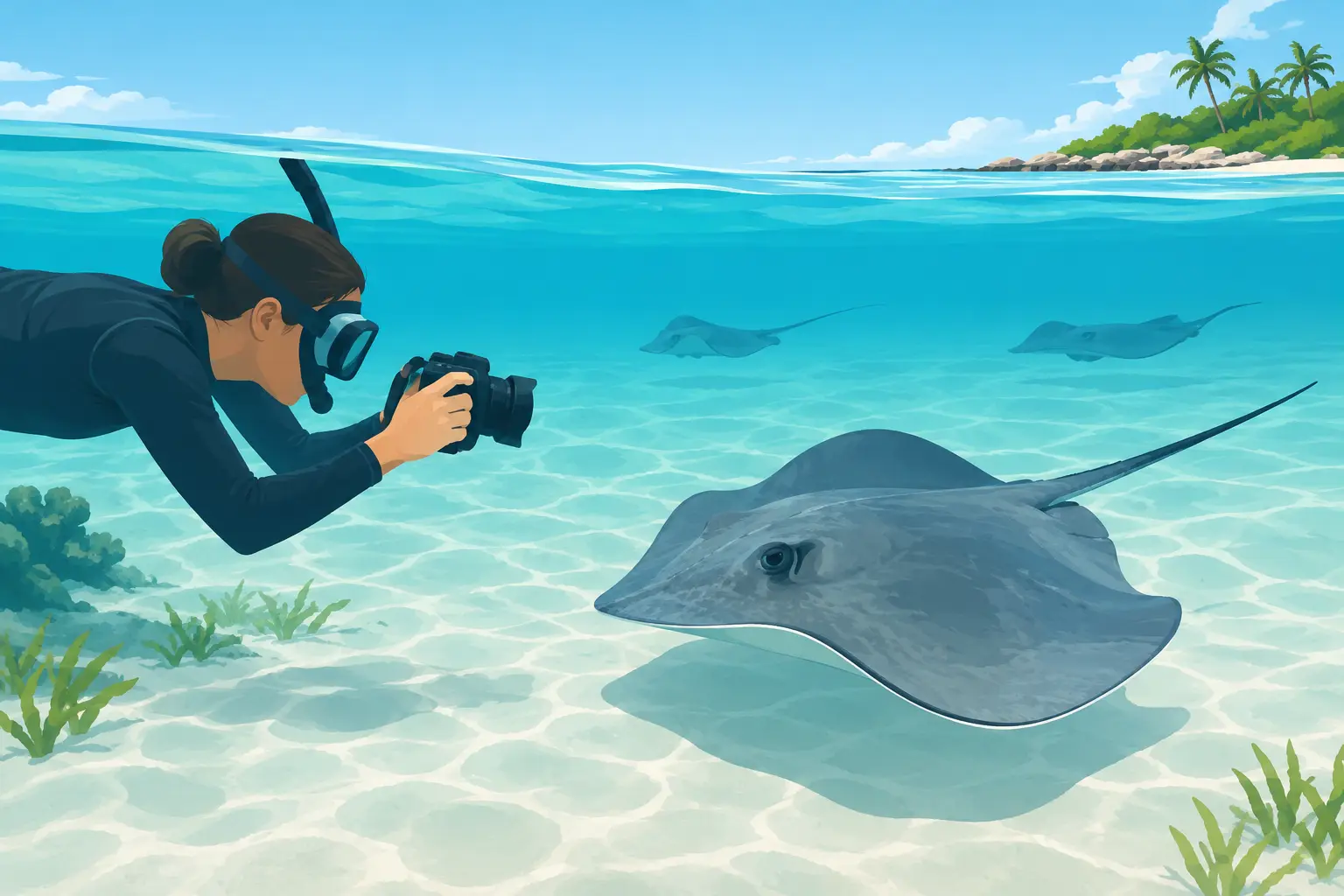
The most flattering stingray photos usually come from a low, side-on angle. If you are snorkeling, float calmly and aim across the sand rather than pointing straight down. This reveals the ray’s shape and movement, while the background water adds depth and color.
Do not dive down or swim beneath a stingray just to create an artistic shot. You can accidentally block its path, rise into it, or kick up sand that ruins visibility for everyone. If you are a certified diver visiting a suitable site, follow your dive plan and your guide’s instructions. In shallow sightseeing areas, snorkeling at the surface or standing where directed is often the better option.
Give the ray room to swim into the frame. Aim your camera toward open sand and wait for it to arrive instead of tracking it aggressively. This approach is quieter, safer, and more likely to create a clean composition. A ray moving toward open space looks natural. A ray surrounded by hands, fins, and cameras rarely does.
Be mindful of the tail in every position. The barb is near the base of the tail, not at the tip, and you should never attempt to move or pose the animal. Keep your body and equipment away from its path, especially when turning, standing, or swimming backward for a wider shot.
Photograph the Whole Experience, Not Just the Ray
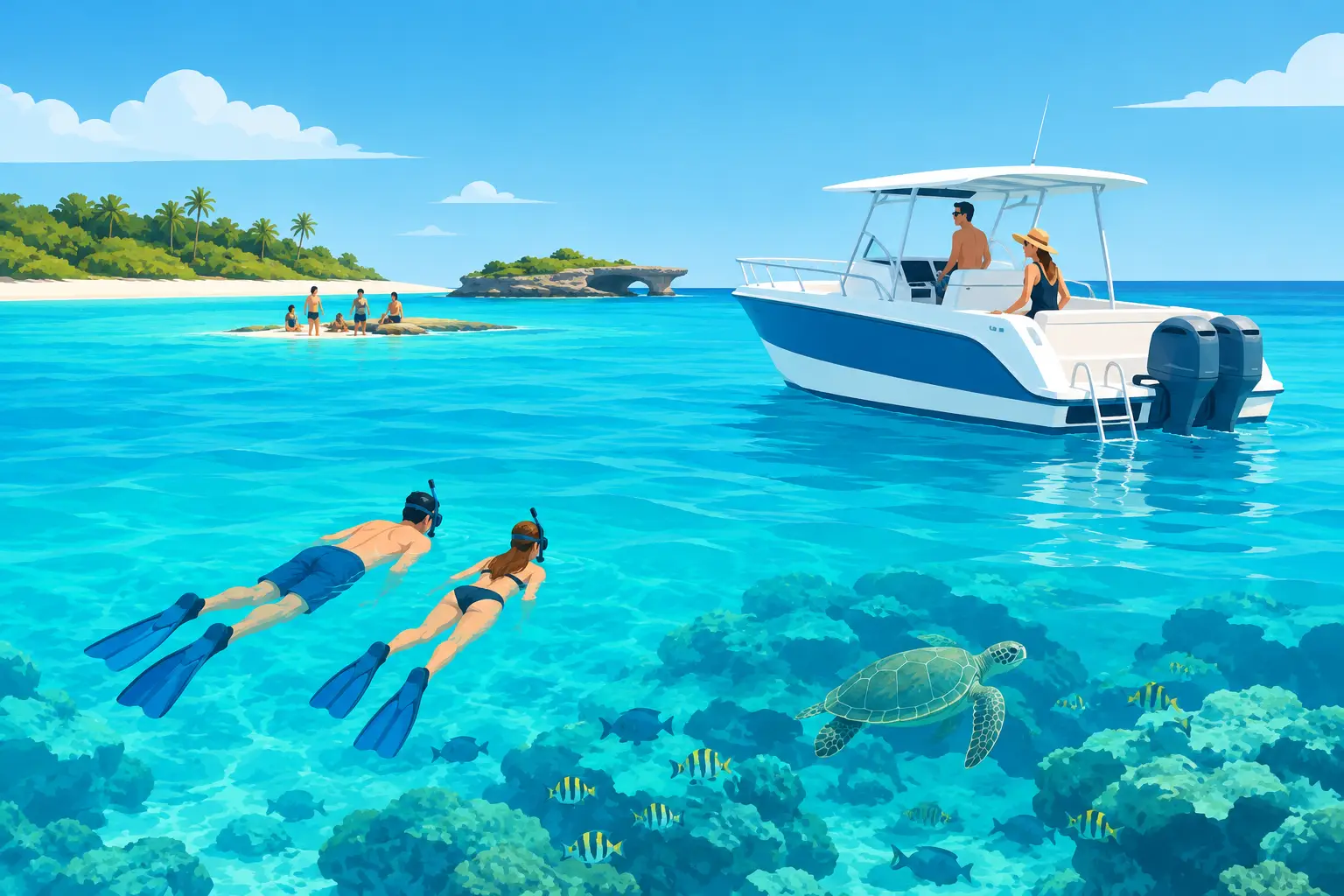
Some of the best vacation images happen between the obvious shots. Photograph your group laughing on the swim platform, a child peering through a mask for the first time, the curve of the horizon from the boat, or the bright water rippling over the sand. These images tell the fuller story of your day on the North Sound.
If you want a photo with a person and a stingray in the same frame, ask your guide for the safest position. Keep the guest relaxed and facing toward the open water, with hands close to the body rather than reaching. The ray should be free to pass through or away from the image at any time.
It is tempting to chase the most dramatic close-up, but a wider image often feels more special. The boat, the blue water, and the natural space around the animal show the scale and beauty of the encounter. They also remind you that the ray is a wild marine animal, not a prop.
Protect the Reef and Keep the Water Clear
Great stingray photos depend on clear water, and clear water depends on careful guests. Avoid kicking up sand with fast fin strokes. Move slowly, keep your fins level, and do not stand on coral or touch any reef life while searching for a better angle.
If you are wearing sunscreen, choose a reef-conscious option and apply it well before getting in the water. Better yet, add a rash guard for sun protection. It keeps you comfortable during a sunny Cayman day and reduces the need for more product in the ocean.
Stay aware of other people in your group. Do not swim into another guest’s shot, and never crowd a ray because someone else has found a good angle. Small-group outings make it easier to spread out, enjoy the moment, and get personal guidance without the rush of a packed boat.
A private or semi-private trip with Blue Ocean Cayman can be especially helpful for guests who want a little more time to get comfortable with their camera. Your crew can help you understand conditions, plan the flow of the stop, and make sure the day includes room for snorkeling, sightseeing, and simply enjoying the ride.
When to Put the Camera Down
The right photo is never worth stressing an animal, ignoring a guide, or losing track of your surroundings. Put the camera down if a ray changes direction repeatedly to avoid people, if visibility becomes poor, if you feel unsteady in the water, or if your crew asks the group to reposition.
You may also decide that the best moment is one you do not photograph at all. Watching a stingray glide silently past your mask, with sunlight dancing across its back, is the kind of vacation memory that stays vivid long after the camera roll fills up.
Bring your camera, keep your distance, follow your crew’s lead, and let Cayman’s incredible marine life set the pace. The most memorable stingray photo is the one that captures the wonder of the encounter while leaving the animal free to keep gliding.