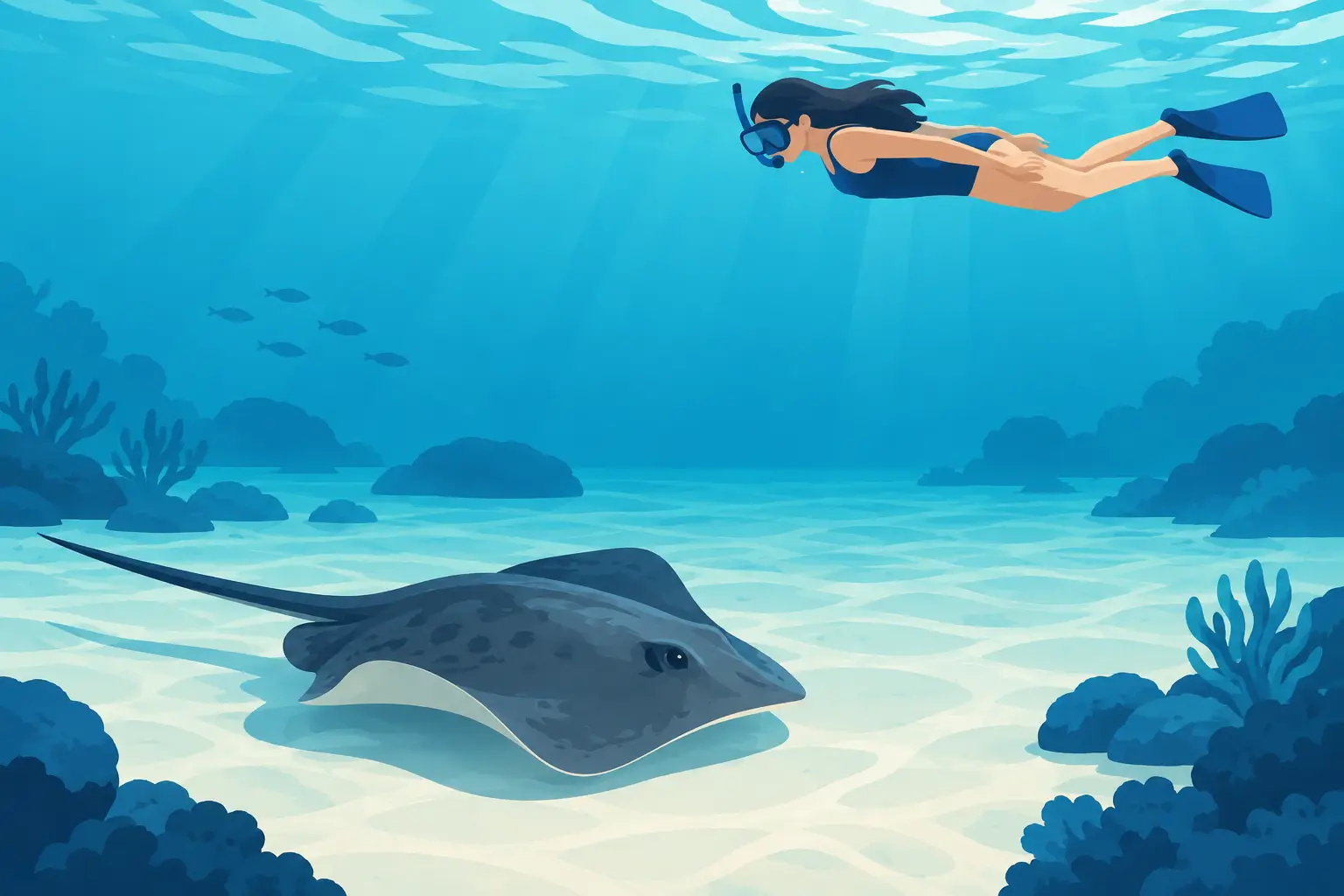
A stingray gliding toward you in clear Cayman water can make even confident swimmers pause. Do stingrays bite swimmers? In normal, respectful encounters, it is very unlikely. Stingrays are not looking for a fight, and the friendly southern stingrays guests meet around Grand Cayman are far more interested in moving calmly through the water than bothering people.
The better question is how to enjoy a close-up encounter without startling the animal. That is where a knowledgeable guide, calm movements, and a little marine-life know-how turn first-time nerves into one of those only-in-Cayman vacation moments.
Do Stingrays Bite Swimmers at Stingray City?
Stingrays can use their small tooth plates to crush food such as shellfish and other bottom-dwelling prey. So, technically, they are capable of a quick nip or pinch if a hand is mistaken for food or if an animal feels handled or crowded. But they do not hunt swimmers, and a bite is not the concern most visitors should focus on.
At Stingray City, rays are accustomed to seeing people in the shallow sandbar environment. They often glide around legs, brush past ankles, and rise toward the surface with an almost curious presence. This can feel surprising, especially when a ray is wider than your outstretched arms, but it is usually calm, natural behavior.
The more meaningful safety consideration is the ray’s tail. Stingrays have a defensive barb, and they use it only when they feel threatened, often when someone accidentally steps on one or traps it. That is why great encounters are gentle encounters. Give the rays room to move, let your guide set the pace, and never chase, grab, or corner them.
Why Stingrays Usually Leave Swimmers Alone
Southern stingrays are bottom feeders and peaceful animals by nature. They do not see people as prey. Their first choice, when given space, is simply to swim away.
A stingray may approach because it is familiar with activity in the area or because it is curious about movement in the water. That does not mean it wants to be touched everywhere or picked up. Wildlife interactions work best when guests stay present, listen closely, and allow the animal to choose its own distance.
There is a trade-off worth remembering: getting close can create an incredible photo and a story your family will repeat long after the trip, but pushing for contact can make the experience less comfortable for everyone, including the ray. The most memorable moments tend to happen when you slow down. Watch the wings ripple. Notice the sandy patterns on its back. Let the encounter come to you.
How to Interact With Stingrays Safely
Your captain and guide should always give you a safety briefing before entering the water. Conditions, water depth, and ray behavior can vary from day to day, so follow their instructions even if you have snorkeled or visited Stingray City before.
When you step down from the boat, enter carefully and keep your eyes on the water. Move with a light, shuffling step rather than taking heavy strides through the sand. This helps avoid startling any marine life resting nearby.
Keep your hands where you can see them, and never put fingers near a stingray’s mouth. If a guided experience includes supervised feeding, use only the method and food provided by the crew. Do not bring snacks from the boat or offer anything on your own. Fingers can be mistaken for food, and feeding practices should be managed responsibly.
Avoid touching the tail, gills, eyes, or underside of a stingray. Do not lift a ray out of the water, sit on one, or try to hold it in place for a photo. If a ray swims close enough for a guide-approved interaction, stay relaxed and let the guide show you the appropriate, gentle way to participate.
Parents should stay close to children in the water. Stingray City is an exciting place for families, but kids can become enthusiastic quickly when a ray swims by. A hand to hold, a simple reminder to stay still, and a guide nearby can make the moment feel magical rather than overwhelming.
What Does It Feel Like When a Stingray Swims By?
Many guests expect a stingray to feel rough or slimy. In reality, their upper surface can feel smooth and velvety, while their movement feels wonderfully graceful. A ray may glide against your leg or circle near your feet as it passes through the group. That gentle brush is common and usually nothing to worry about.
Try not to jump backward or splash wildly if it happens. Pause, breathe, and let the ray continue on its way. The water at the Stingray City sandbar is often shallow enough to stand, which gives many first-time visitors extra confidence. Still, every excursion depends on weather, tides, and individual comfort levels. If you feel nervous, tell your crew. A great private or small-group outing gives you room to enjoy the experience at your own pace.
Can You Get Stung While Swimming?
Stingray injuries are uncommon during properly guided encounters, but they are possible anywhere stingrays live. A sting generally happens when a person accidentally steps directly on a ray in shallow water or when the animal is handled roughly. It is a defensive response, not an attack.
The best prevention is simple: watch where you step, shuffle your feet in sandy shallows, and never attempt to catch or restrain marine life. At a managed stingray encounter, listen to the crew and remain aware of where rays are moving around you.
If anyone is stung, alert the captain immediately. Boat crews are trained to respond, assess the situation, and arrange further care when needed. Do not try to tough it out or continue swimming as though nothing happened. Quick attention is the smart choice, especially when you are on vacation and want to get back to feeling your best.
A Few Smart Tips Before Your Stingray City Visit
Come prepared to be in the water, not just to take pictures from the boat. Wear swimwear you can move comfortably in, use reef-safe sun protection when appropriate, and bring a towel and dry clothes for the ride back. If you wear a mask or snorkel, ask your crew for help with fit before you jump in. A well-fitted mask makes it much easier to watch rays sweep across the sand below.
Leave jewelry loose enough to fall off at home, and secure sunglasses, hats, and phones before the boat starts moving. Water shoes can be useful for getting on and off a boat, though your guide will advise what works best for the sandbar conditions that day.
Most of all, arrive ready to listen and enjoy. You do not need to be an expert swimmer to appreciate the experience, but being honest about your comfort level helps your crew give you the right support. Couples can take their time getting comfortable together. Families can stay in a calmer area. Confident snorkelers can focus on underwater photos and the remarkable details of the rays’ movement.
Make the Encounter About Wonder, Not Worry
Stingray City is famous because it delivers a rare kind of wildlife moment: warm Caribbean water, bright sand beneath your feet, and graceful rays passing close enough to leave you speechless. Respect is what keeps that moment special.
With calm behavior, expert guidance, and space for the animals to move freely, the answer to “do stingrays bite swimmers?” becomes reassuringly clear. They are not out to bite you. Come curious, move gently, and let Blue Ocean Cayman help you make room for the kind of ocean memory that feels even better than the photos look.