The first time you float above a Cayman reef, the water can feel almost unreal. Sunlight flickers across the sand, schools of bright fish move beneath you, and the reef seems close enough to touch. So, can beginners go reef snorkeling? Absolutely. With calm conditions, the right equipment, and a patient guide nearby, reef snorkeling can be one of the most memorable activities of a Cayman vacation, even if you have never worn a mask and fins before.
You do not need scuba certification, years of ocean experience, or perfect swimming technique to enjoy the view. You do need to be honest about your comfort level, choose an outing designed around your group, and let your guides set the pace. That is how a first snorkel becomes a vacation highlight instead of a stressful swim.
Why Grand Cayman Is Great for First-Time Snorkelers
Grand Cayman offers clear Caribbean water, colorful shallow reef areas, and boat access that can take you away from crowded shore entry points. From the deck, you can ease into the water at a site selected for the day’s weather, visibility, and your group’s experience level.
For beginners, that flexibility matters. A great reef is not automatically a great first-snorkeling reef. The best choice may have gentle water, easy entry, good visibility, and plenty to see without requiring a long swim. Conditions change with wind and current, so experienced local crews look beyond a map and choose the location that makes sense that day.
The reef experience is also wonderfully flexible. Some guests want to swim over coral formations and follow fish for as long as possible. Others prefer to float near the boat, look down through crystal-clear water, and take it all in at their own speed. Both count as snorkeling, and both can be spectacular.
Can Beginners Go Reef Snorkeling Safely?
Yes, when the outing is matched to their abilities and conditions are appropriate. The key is not trying to prove anything. Snorkeling should feel fun, unhurried, and well supported.
A quality guided excursion begins with a clear safety briefing. Your crew should explain how to use the mask, snorkel, fins, and flotation equipment before anyone gets in the water. They should also point out the easiest place to enter and exit, establish the boundaries for the snorkel area, and stay attentive while guests are in the water.
If you are not a confident swimmer, say so before departure. That information helps the crew choose the right approach and recommend a flotation vest, pool noodle, or other support. Using flotation is not a sign that you are doing it wrong. It lets you relax your body, save energy, and spend more time watching the reef instead of worrying about staying afloat.
It also helps to separate a fear of deep water from the actual snorkeling experience. You may be floating above water that looks deep, yet still feel secure with a life vest, a guide nearby, and a boat in sight. On the other hand, if the water is choppy or you feel panicked, it is completely fine to stay aboard. The ocean is not going anywhere, and a good day on the boat should never depend on forcing yourself into the water.
What Your First Reef Snorkel Feels Like
Most first-time snorkelers need a few minutes to get used to breathing through a snorkel. It can feel strange at first because your face is in the water while you breathe through the tube. Start near the boat or in a calm area, hold onto a flotation device if you like, and take slow, steady breaths.
Your mask should form a comfortable seal around your eyes and nose. A little water getting inside is common, especially while you are learning, and your guide can show you how to clear it. The goal is not to look polished. The goal is to become comfortable enough to lift your head, adjust your gear, and start again whenever you need to.
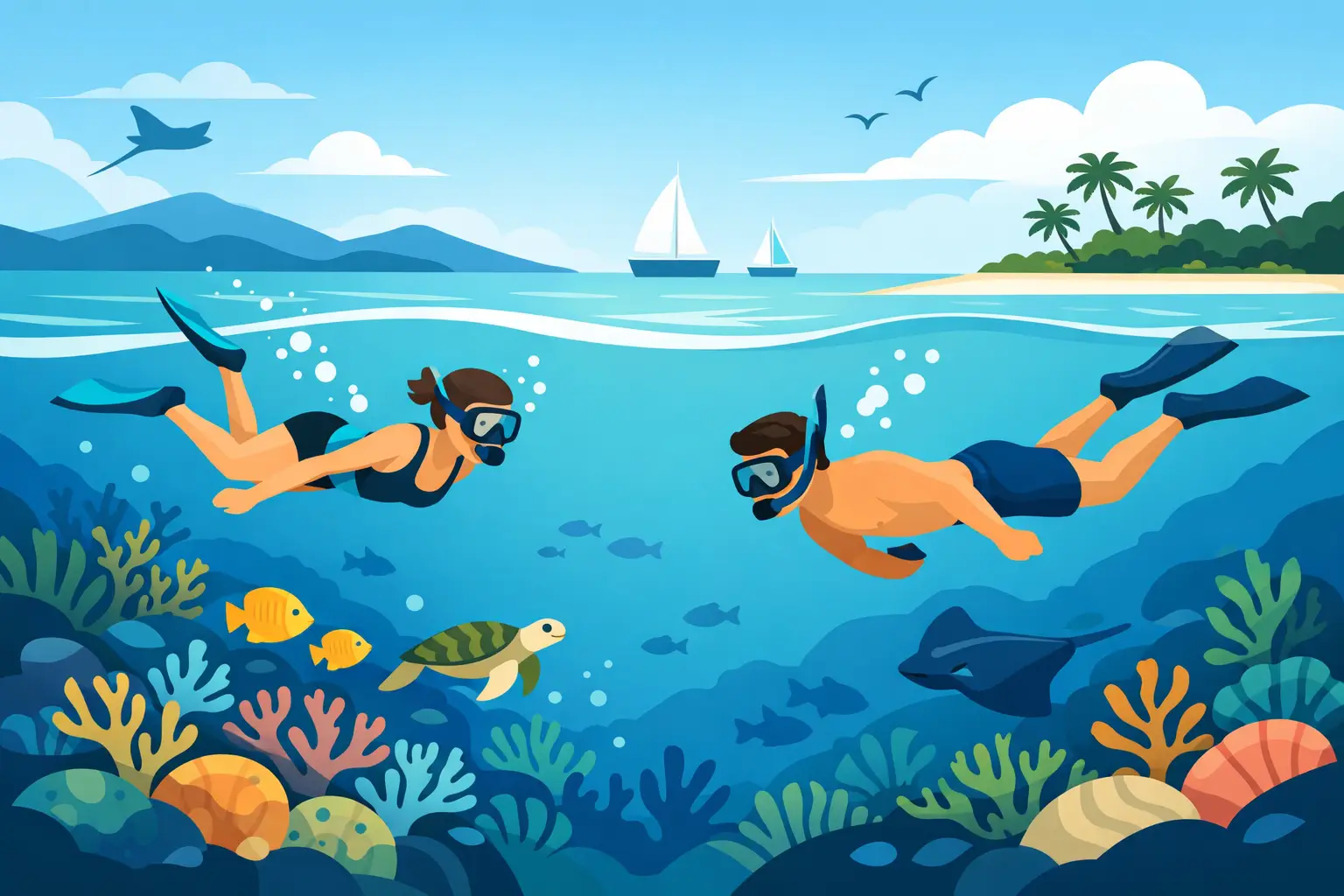
Once you settle in, the pace changes. The sounds of the boat fade. You float quietly over a living underwater landscape, spotting blue tangs, parrotfish, sergeant majors, and perhaps a graceful stingray gliding across the sand. The most surprising part for many beginners is how little effort is required once they stop rushing and let the water carry them.
Fins can help you move efficiently, but small, gentle kicks are all you need. Big kicks create splashing, use energy quickly, and can bring you too close to coral. Keep your body long and relaxed, and look forward as well as down. Fish often appear beside you, not just below you.
Simple Ways to Feel More Comfortable Before You Go
A little preparation makes a big difference, especially for guests who have not been in the ocean recently. You do not need to train for reef snorkeling, but you can arrive ready to enjoy it.
Before the trip, drink water, eat a light meal, and use reef-conscious sun protection before boarding so it has time to absorb. If you are prone to motion sickness, plan ahead with options recommended by your medical provider. The boat ride should be part of the adventure, not something you spend trying to recover from.
When you meet your crew, tell them if you are a first-timer, a nervous swimmer, traveling with children, or have any physical limitation that may affect mobility in the water. This is useful information, not an inconvenience. Private and small-group outings are especially helpful for mixed-experience groups because there is room to ask questions, take breaks, and move at a pace that works for everyone.
Bring a towel and a dry change of clothes for afterward, but leave valuables behind when possible. A secure-fitting swimsuit or rash guard is more comfortable than constantly adjusting straps. If you wear prescription glasses, ask in advance about prescription mask options or whether contacts are suitable for you.
Reef Etiquette That Protects the Experience
A reef is beautiful because it is alive, and that means every visitor has a role in protecting it. The best snorkeling happens when guests observe with care rather than chase the moment.
Keep a respectful distance from coral, sea turtles, rays, and fish. Never stand on the reef, even if it looks like solid rock. Coral can be fragile, and a single touch or fin kick can damage it. Avoid feeding wildlife, reaching toward animals, or trying to grab shells and marine life for a photo.
For photos, let the wildlife come to you. Floating calmly often gives you a better view than swimming after every fish. You will also use less energy and have more fun.
Choosing the Right Snorkeling Tour for Beginners
Not every snorkeling trip offers the same experience. A large, packed boat may be a fit for travelers who simply want a quick stop, but nervous first-timers often benefit from more personal guidance and a less rushed atmosphere.
Look for a tour that offers manageable group sizes, quality snorkeling gear, flotation support, knowledgeable guides, and a clean, comfortable boat with shade. Ask whether the captain can adjust the route based on the weather and whether the excursion welcomes guests with different swimming abilities. A family may have one confident teenager, one curious first-time snorkeler, and one adult who wants to enjoy the views from the boat. The right charter can make room for all three.
Blue Ocean Cayman creates private and small-group days on the water that can pair reef snorkeling with favorite island experiences such as Stingray City or Starfish Point. That variety is ideal when not everyone in your party wants the exact same level of adventure. One unforgettable day can include a peaceful reef float, a wildlife encounter, music on the boat, and time to simply enjoy the Caribbean breeze.
When Beginners May Want to Wait
There are times when skipping the snorkel is the smartest choice. High winds, rough water, poor visibility, exhaustion, dehydration, illness, or significant anxiety can all make the experience less enjoyable. A responsible captain may change the site, adjust the itinerary, or advise against entering the water if conditions are not right.
Listen to that guidance. Choosing comfort and safety does not mean missing the adventure. You can still enjoy the boat ride, take photos, watch for marine life from the deck, and save your first snorkel for calmer conditions. The best memories come from feeling cared for, not pressured.
If reef snorkeling is on your Cayman wish list, do not let being a beginner hold you back. Tell your crew what you need, use the flotation support that helps you relax, and give yourself permission to go slowly. The reef rewards curiosity, and your first look beneath Cayman’s blue water may be the moment your vacation becomes unforgettable.